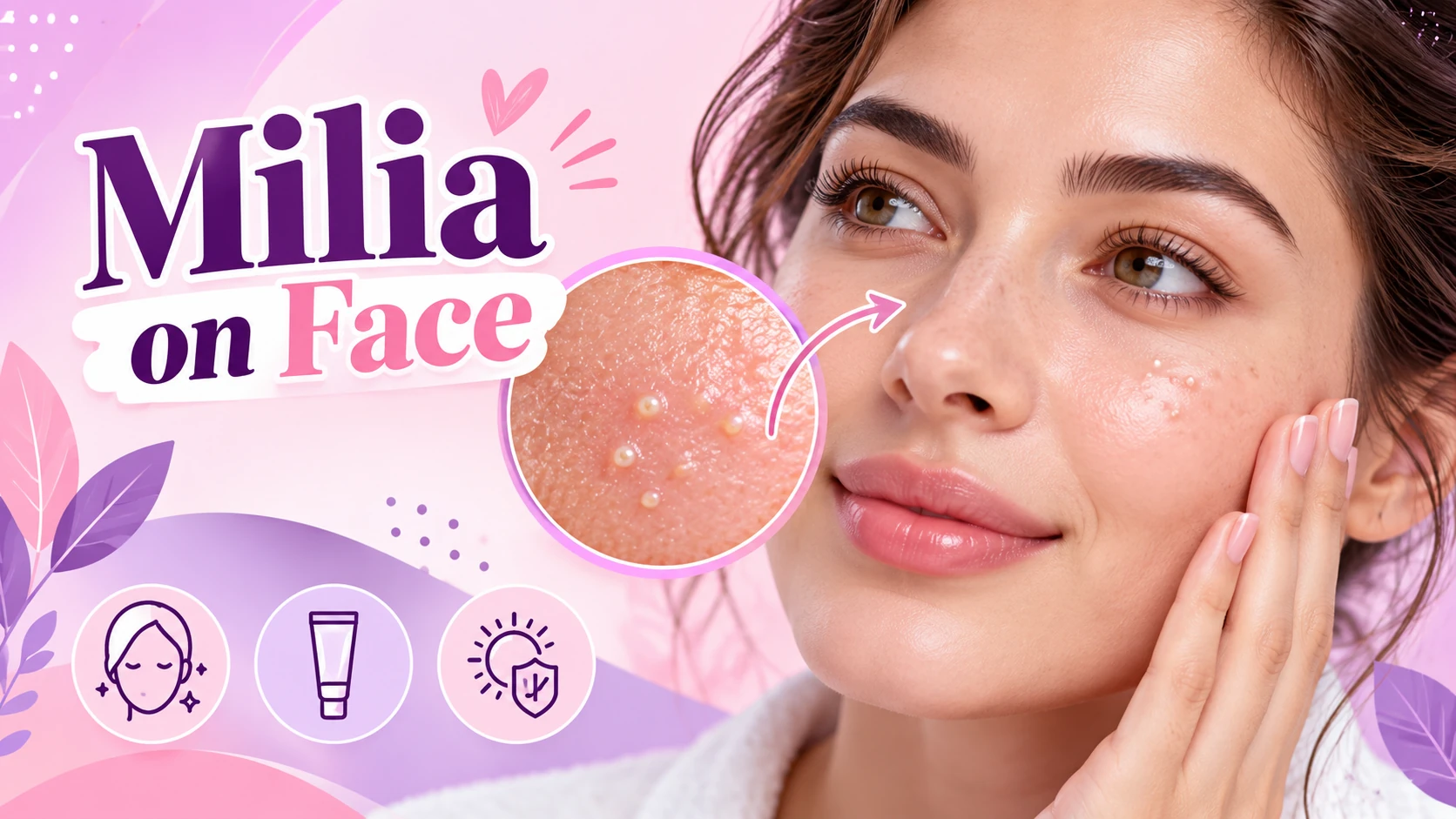
Milia on Face
Causes, treatment options, and safe skincare for tiny white bumps.
Milia are tiny white or yellowish bumps that may appear on the cheeks, nose, forehead, or around the eyes. These bumps are usually harmless, but they can look similar to whiteheads. Understanding the difference can help you care for your skin gently and know when to seek professional advice.
Milia are generally harmless and painless.
Small, firm bumps beneath the skin’s surface.
Milia are not the same as whiteheads.
Avoid squeezing or picking at bumps.
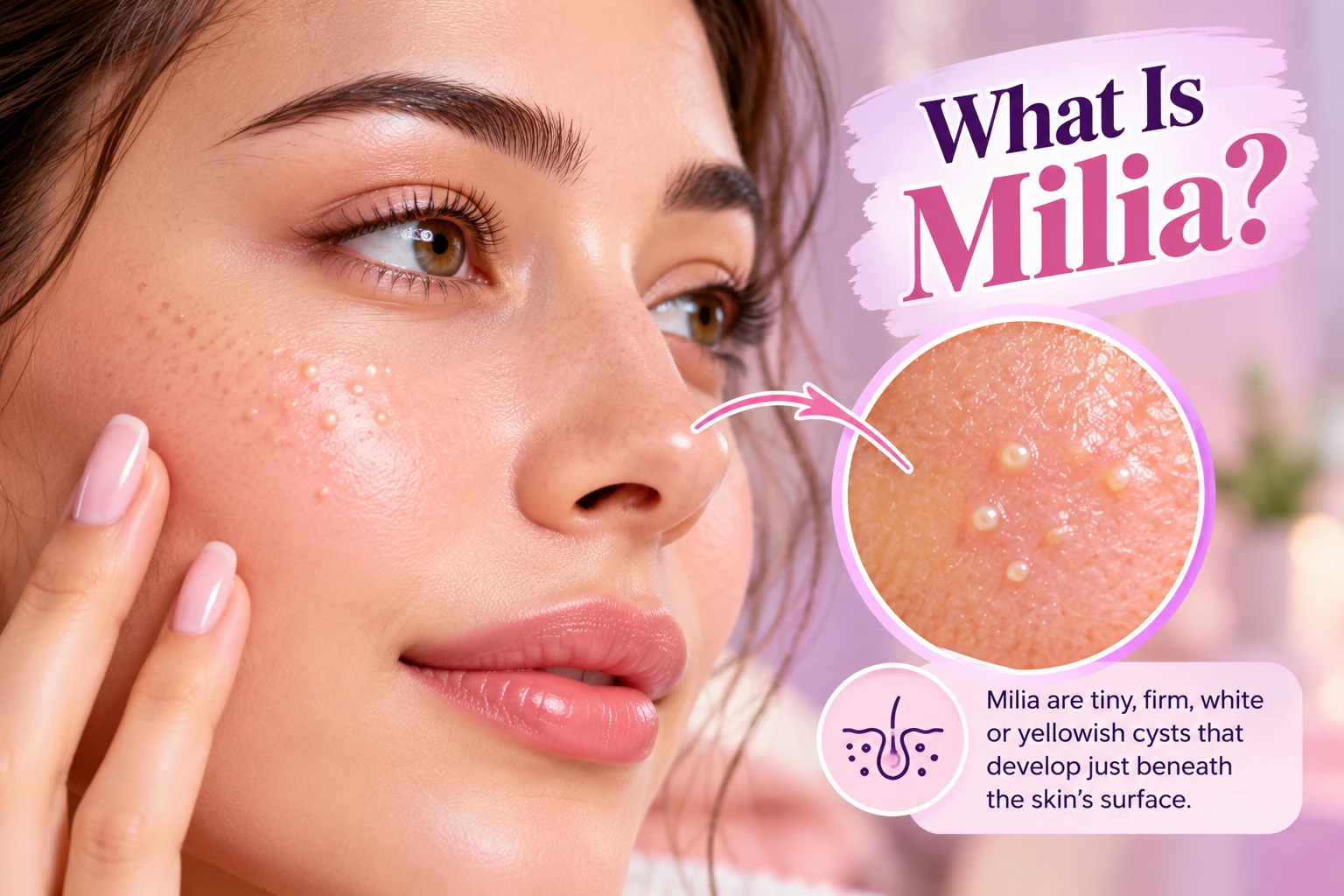
What Is Milia?
Milia are small, firm cysts that form when keratin becomes trapped beneath the skin’s surface. This protein is found in the skin, hair, and nails. As a result, milia often appear as tiny pearly bumps on the cheeks, nose, forehead, or around the eyes.
Unlike typical acne spots, milia are not caused by bacteria and usually do not become red or inflamed. They are generally harmless. However, a healthcare professional can help identify a bump if you are unsure what it is.
What Causes Milia on the Face?
Milia can develop for different reasons. In many cases, keratin becomes trapped beneath the skin. Additionally, some forms may occur after skin injury or alongside certain skin conditions.
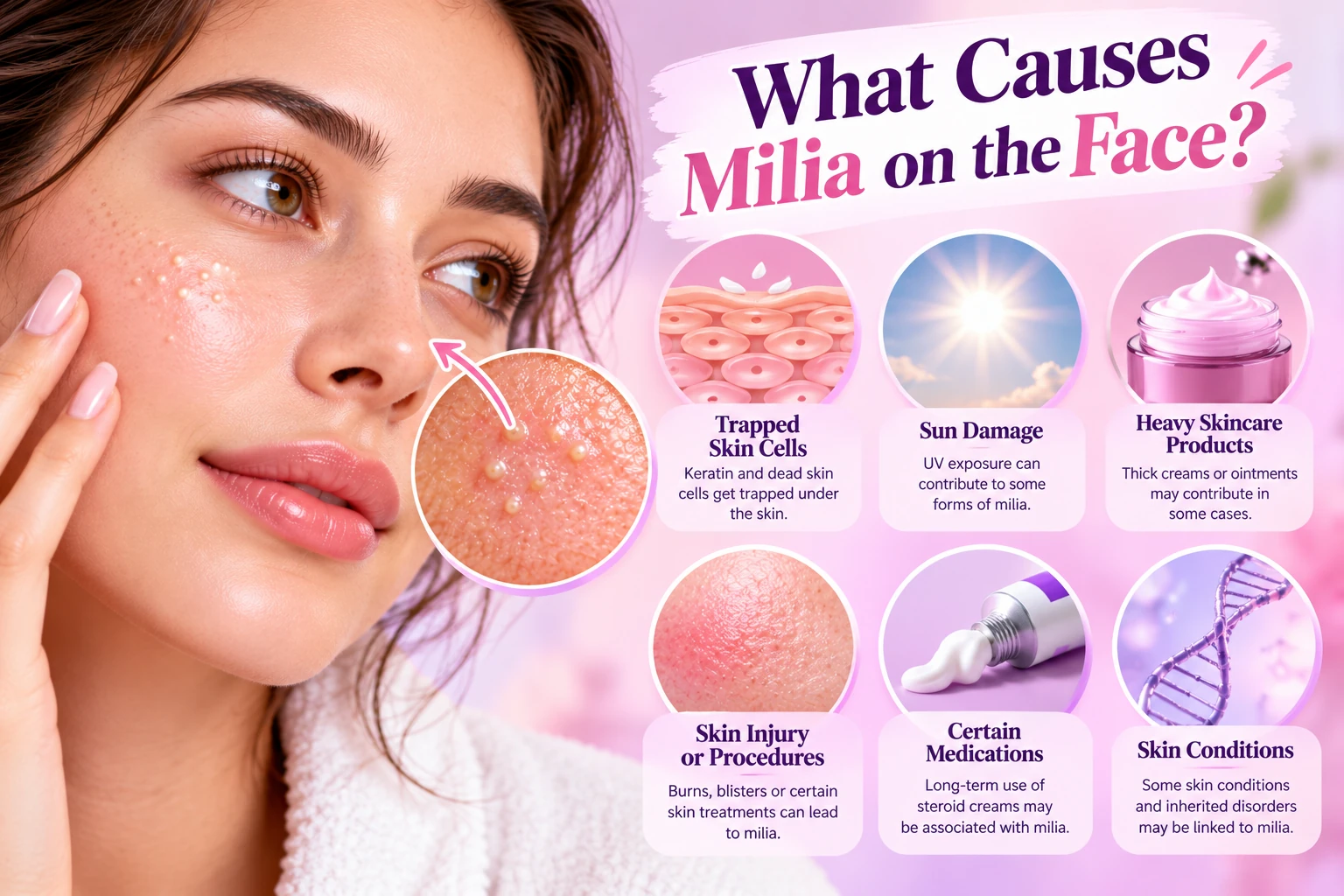
Trapped Keratin
Keratin trapped beneath the skin can form the small cysts known as milia.
Skin Injury
Some types of milia may appear after burns, blisters, or other skin damage.
Skincare Products
Heavy products may not suit every skin type. Choose products according to your skin’s needs.
Skin Conditions
Some forms of milia are associated with particular skin conditions or treatments.
Milia can also occur in newborns. Their presence does not automatically mean that the skin is dirty or that a skincare routine is wrong.
Milia vs. Whiteheads
Milia and whiteheads can look similar, but they form differently. Milia are keratin-filled cysts, whereas whiteheads are a type of acne caused by clogged pores. Therefore, the two bumps should not be treated as though they are the same condition.
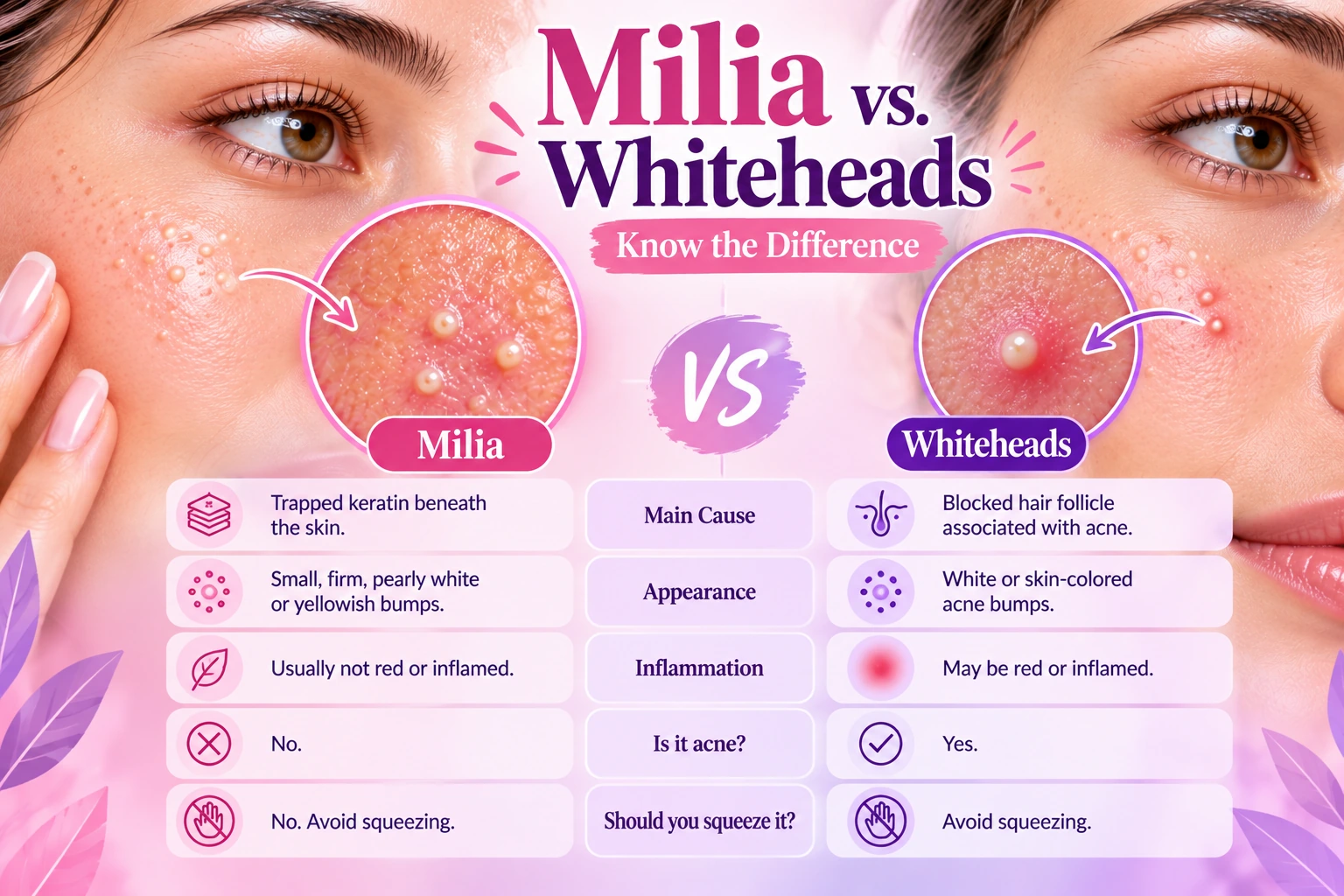
| Feature | Milia | Whiteheads |
|---|---|---|
| Type | Keratin-filled cysts | Clogged pores |
| Appearance | Firm, pearly bumps | White or skin-coloured bumps |
| Acne-related | No | Yes |
| Home removal | Avoid squeezing | Avoid squeezing |
Remember: Appearance alone cannot confirm a diagnosis. If you are unsure whether a bump is milia or acne, ask a dermatologist.
How to Get Rid of Milia Safely
Some milia disappear naturally over time. However, others may persist and can be removed by a trained healthcare professional. The right approach depends on the location and type of milia.
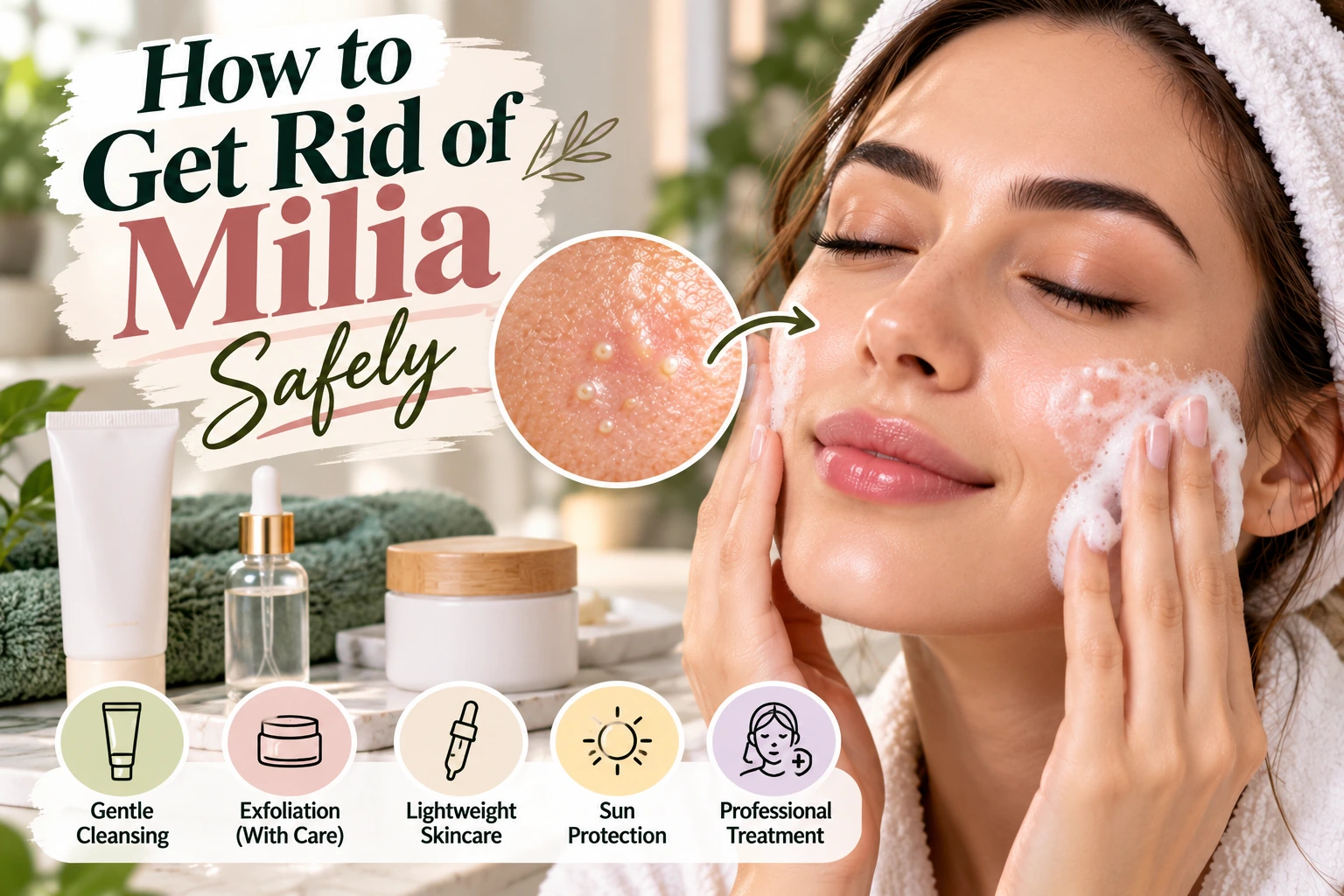
01. Keep Cleansing Gentle
Use a mild cleanser and avoid scrubbing or irritating the affected skin.
02. Choose Suitable Products
Use skincare suited to your skin. Stronger exfoliation is not a guaranteed way to remove existing milia.
03. Consider Professional Care
A dermatologist can assess persistent milia and discuss appropriate removal options.
04. Be Careful Near the Eyes
Seek professional advice for bumps on the eyelids or close to the eyes.
Important: Do not squeeze, pierce, or cut milia at home. This can damage the skin and increase the risk of scarring or infection. Never attempt extraction close to the eyes.
How to Prevent Milia
Not every type of milia can be prevented. Even so, a gentle, consistent routine can support skin health and reduce unnecessary irritation.
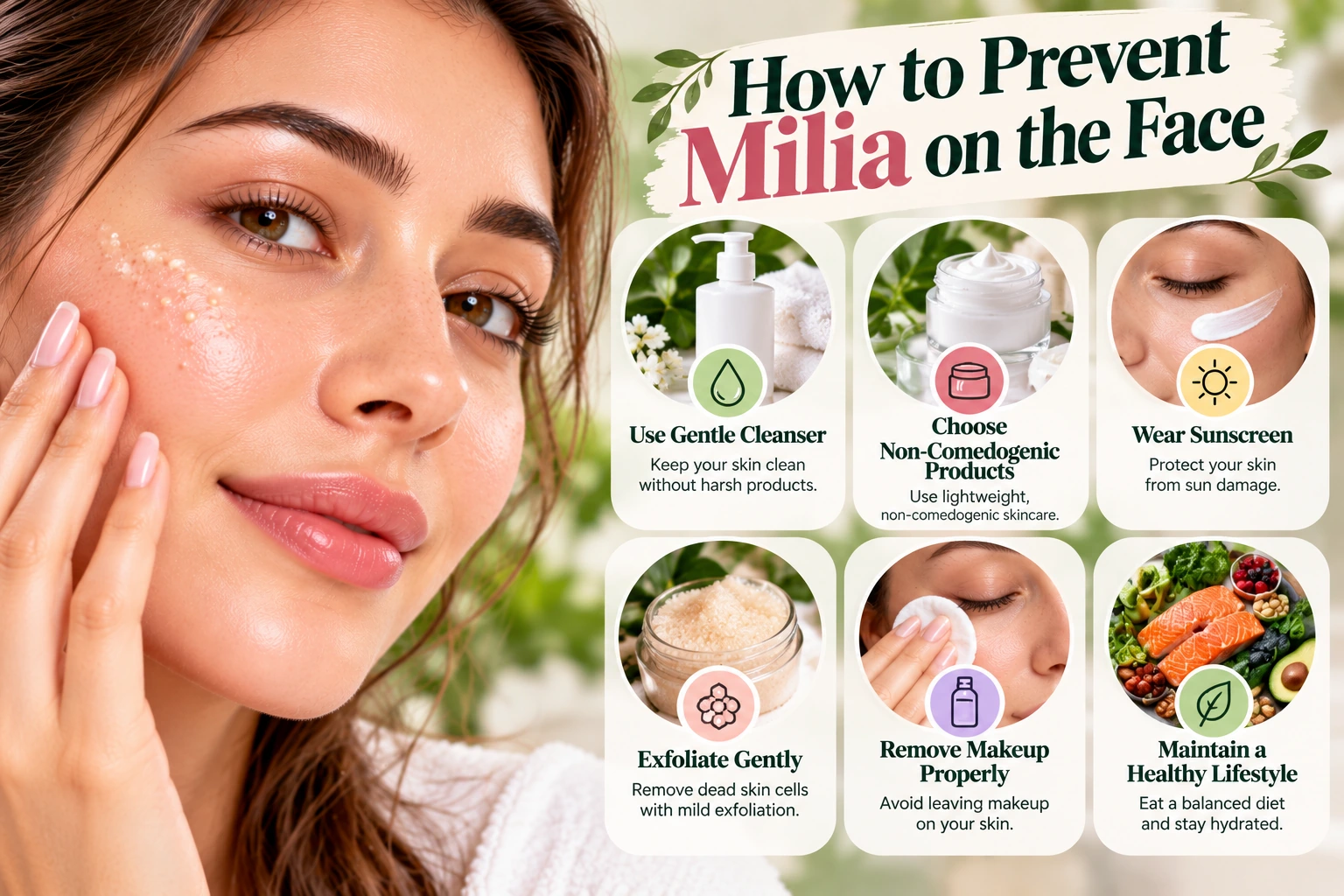
- Cleanse your face gently without harsh scrubbing.
- Choose skincare products suitable for your skin type.
- Use broad-spectrum sunscreen to protect against sun damage.
- Remove makeup gently before going to bed.
- Avoid picking at bumps or irritating the affected area.
- Introduce exfoliating products cautiously and stop if irritation develops.
Building Your First Skincare Routine?
Learn the basics of a beginner-friendly routine, including cleansing, moisturising, and sunscreen.
Read the Beginner’s Guide →These habits support general skin care, but they cannot guarantee that milia will not develop.
When to See a Dermatologist
Milia are usually harmless and do not always need treatment. However, professional advice is helpful if you are uncertain about the bumps or want to discuss safe removal.
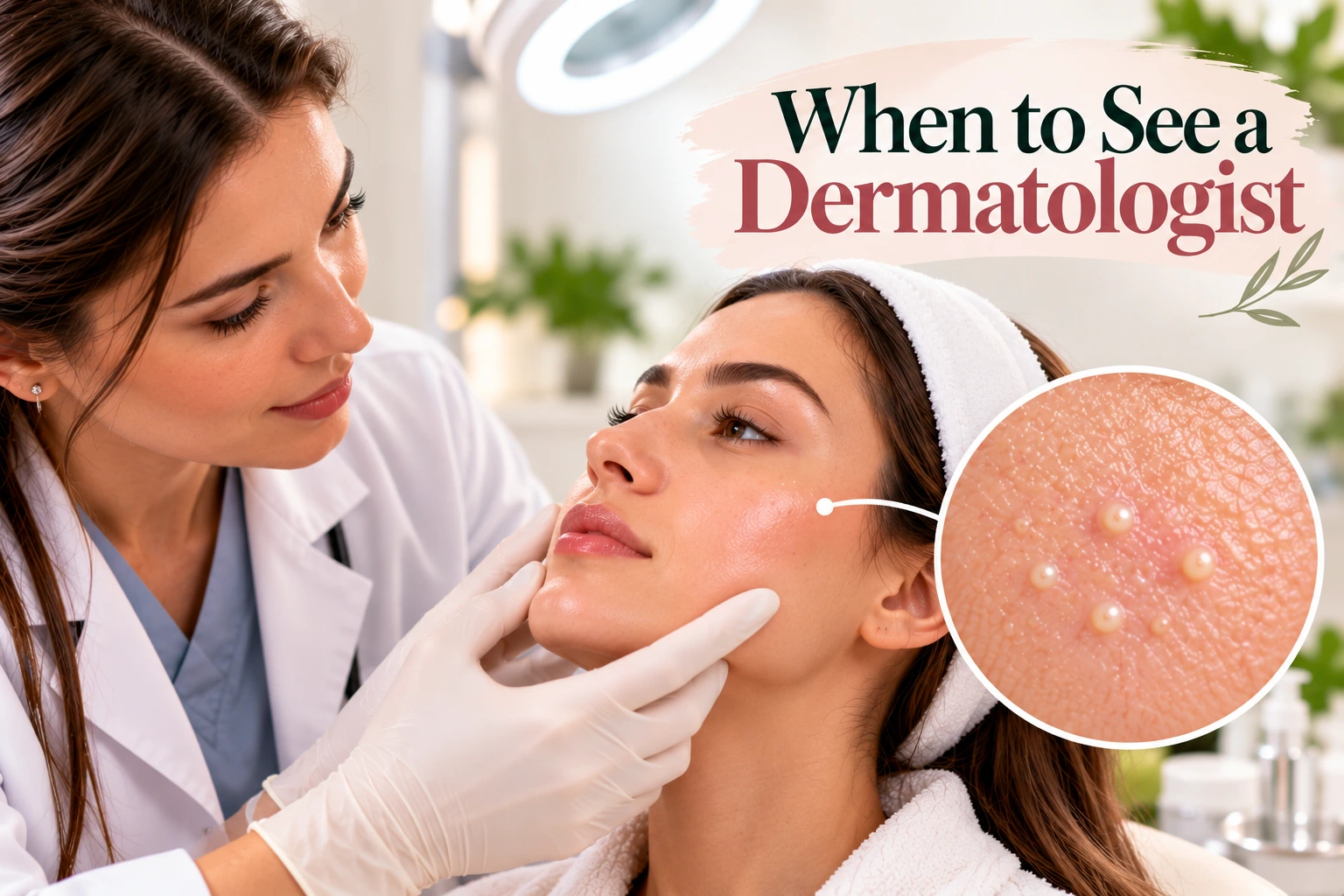
- The bumps persist and you want to discuss treatment.
- You are unsure whether the bumps are milia or another skin condition.
- The bumps appear on your eyelids or close to your eyes.
- The area becomes painful, increasingly red, or irritated.
- You notice many bumps or changes in their appearance.
A dermatologist can assess your skin and identify the likely cause. Based on that assessment, they can recommend suitable next steps.
Looking for reliable skincare advice?
Read guidance from the American Academy of Dermatology for additional information about caring for your skin.
Read Dermatology Advice ↗Frequently Asked Questions
Here are answers to common questions about milia, home care, and professional treatment.
Final Thoughts
Milia on the face are common, usually harmless, and different from acne. A gentle skincare routine can help keep your skin comfortable. Avoid squeezing or trying to remove bumps yourself.
If milia persist, appear close to your eyes, or you are unsure what the bumps are, a dermatologist can help you choose a safe approach. In the meantime, focus on consistent care rather than harsh treatments or quick fixes.
Your Beauty & Skincare Journey
Discover more practical skincare advice, beauty guides, and product discovery ideas with BeautyGlowHub.
Explore BeautyGlowHub →