
SKINCARE GUIDE
Dry Skin Treatment
Dry, tight, rough, or flaky skin can make everyday skincare feel uncomfortable. The good news is that a gentle routine, the right moisturizer, and a few consistent habits can often help improve dryness. This guide explains common causes, how to care for dry skin, which moisturizer ingredients to consider, and when to seek professional advice.
General skincare information only. Persistent or severe skin symptoms should be assessed by a healthcare professional.
What Is Dry Skin?
Dry skin develops when the outer layer of the skin loses too much water or does not retain moisture effectively. It may feel tight after cleansing, look dull or flaky, or feel rough when you touch it. Some people notice dryness mainly on their cheeks, while others experience it on their hands, arms, legs, or across several areas of the body.
Dryness can be temporary, such as after spending time in cold weather or taking a long, hot shower. For other people, it can be a recurring concern that needs a more consistent skincare routine. Dry skin can also occur alongside conditions such as eczema or other forms of dermatitis, so not every case should be treated as ordinary dryness.
The goal of a basic dry skin treatment routine is to reduce unnecessary irritation, support the skin’s moisture barrier, and limit water loss. Gentle cleansing and regular moisturizing are usually better starting points than adding lots of exfoliating products or strong active ingredients.
Common Causes of Dry Skin
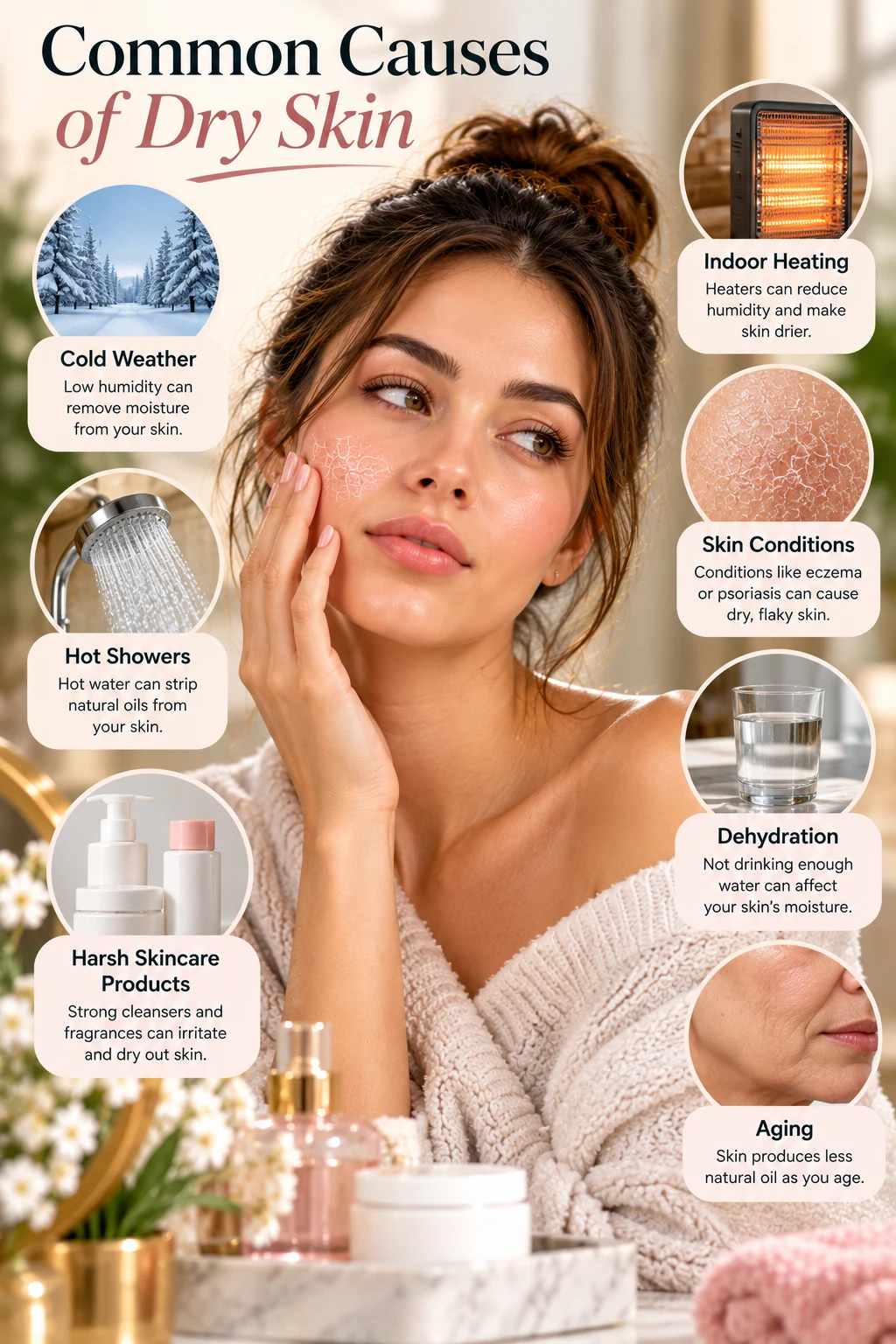
Dry skin does not always have one single cause. Weather, washing habits, skincare products, age, and certain skin conditions can all play a role. Identifying what makes your skin feel worse can help you simplify your routine and avoid repeated irritation.
Cold Weather and Low Humidity
Cold air and low humidity can contribute to moisture loss. Indoor heating or air conditioning may also make the environment drier. If your skin becomes rough or tight during particular seasons, consider using a richer moisturizer and keeping your routine gentle during those periods.
Hot Showers and Harsh Cleansers
Long, hot showers and frequent washing can remove oils that help protect the skin’s surface. Strong soaps, heavily fragranced products, and cleansers that leave your skin feeling squeaky clean may also worsen dryness. Choose lukewarm water and a mild cleanser instead.
Over-Exfoliation and Irritating Products
Using scrubs, exfoliating acids, or several active ingredients too frequently may leave skin feeling tight, stinging, or flaky. When dryness appears after introducing a new product, pause potentially irritating products and return to a simpler routine. If the reaction continues, seek professional advice.
Underlying Skin Conditions
Persistent dryness, intense itching, redness, cracking, or recurring patches may be linked to a skin condition rather than a lack of moisturizer alone. A clinician can help identify the cause and recommend appropriate treatment when everyday skincare is not enough.

How to Treat Dry Skin
A useful dry skin treatment plan does not need to be complicated. Focus on gentle cleansing, applying moisturizer consistently, protecting your skin from environmental stress, and avoiding products that make irritation worse. Give a simple routine time to work rather than frequently changing several products at once.
1. Cleanse Gently
Use lukewarm rather than hot water and choose a gentle, fragrance-free cleanser. You generally do not need to create a thick lather or repeatedly wash dry areas. After washing, pat the skin gently with a soft towel instead of rubbing it vigorously.
2. Moisturize While Skin Is Damp
Apply moisturizer soon after washing or bathing, while your skin is still slightly damp. This helps trap moisture. Reapply whenever your skin feels dry, and pay attention to areas that become especially rough, such as hands, elbows, and lower legs.
3. Protect Your Skin During the Day
Use broad-spectrum sunscreen with SPF 30 or higher on exposed skin. Shade, protective clothing, and avoiding excessive sun exposure can also help protect your skin. If you work with cleaning products or wash your hands often, protective gloves and a suitable hand cream may help reduce dryness.
4. Make Your Environment More Comfortable
If indoor air is dry, a clean humidifier may help add moisture to the air. Avoid sitting too close to direct heat for long periods if it makes your skin feel tighter. Small adjustments to your environment can complement a regular moisturizing routine.
For more guidance, read the American Academy of Dermatology’s dry skin care tips.
Choosing the Right Moisturizer for Dry Skin
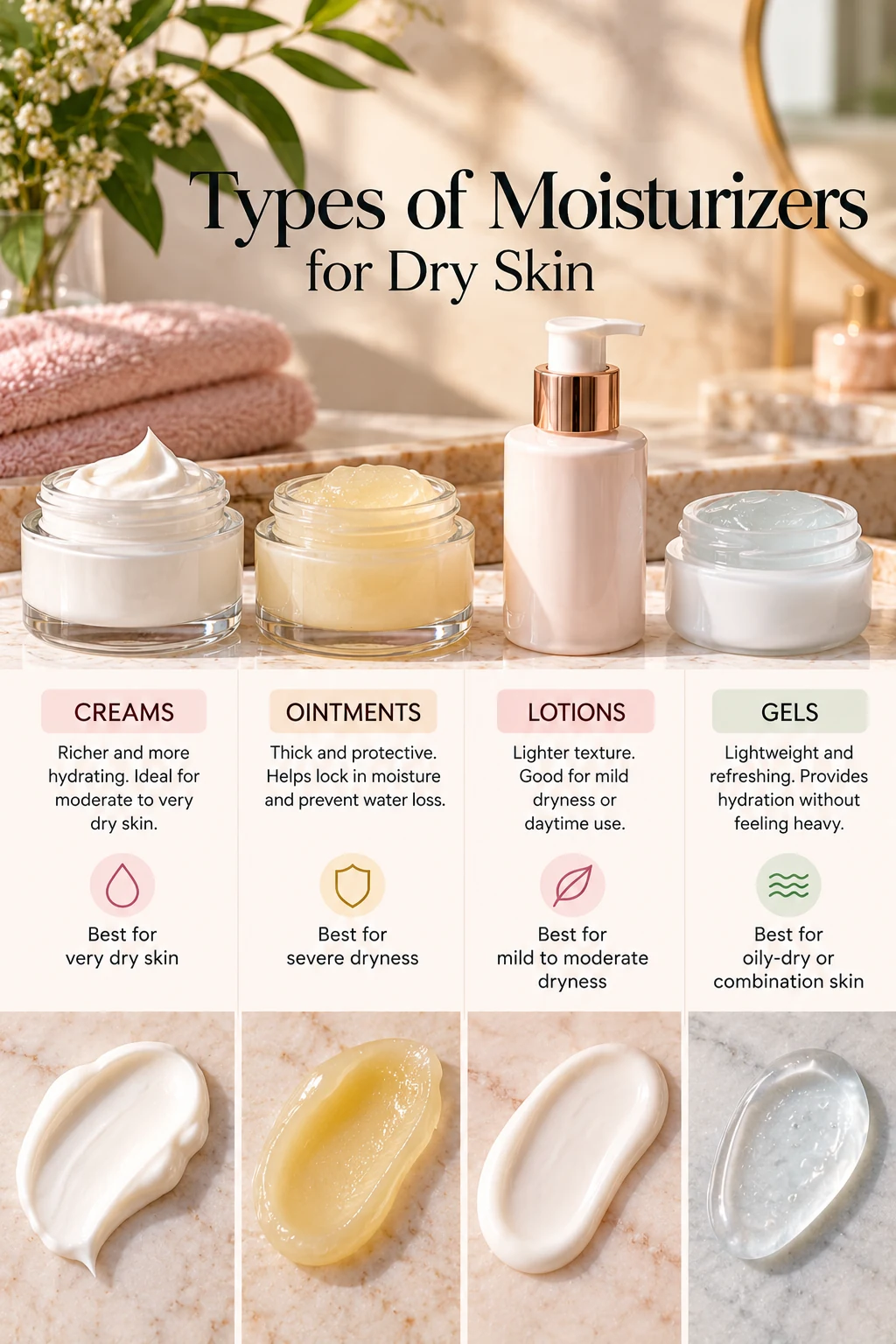
The right moisturizer should feel comfortable enough for you to use regularly. Lotions are usually lighter, creams are thicker, and ointments are often the richest option. Very dry skin may benefit from a cream or ointment, while someone who dislikes heavy textures may prefer a lighter formula and more frequent application.
Look for products labelled fragrance-free if your skin is easily irritated. The word “unscented” does not always mean a product contains no fragrance-related ingredients, so check the ingredient list if you know that fragrance bothers your skin.
Ingredients Worth Knowing
- Glycerin: Helps attract water into the outer layers of the skin.
- Hyaluronic acid: Helps bind water and is commonly used in hydrating formulas.
- Ceramides: Lipids that help support the skin’s protective barrier.
- Petrolatum and mineral oil: Help reduce moisture loss by forming a protective layer.
- Shea butter: Adds emollient richness to many moisturizing products.
- Urea: Can help moisturize rough, dry skin; some formulas may sting irritated or cracked skin.
No single ingredient is perfect for everyone. If you are acne-prone, look for a product labelled non-comedogenic and see how your skin responds. If you have sensitive or damaged skin, introduce new products cautiously and stop using anything that causes persistent burning or irritation.
Explore this trusted guide: How to choose the right moisturizer.
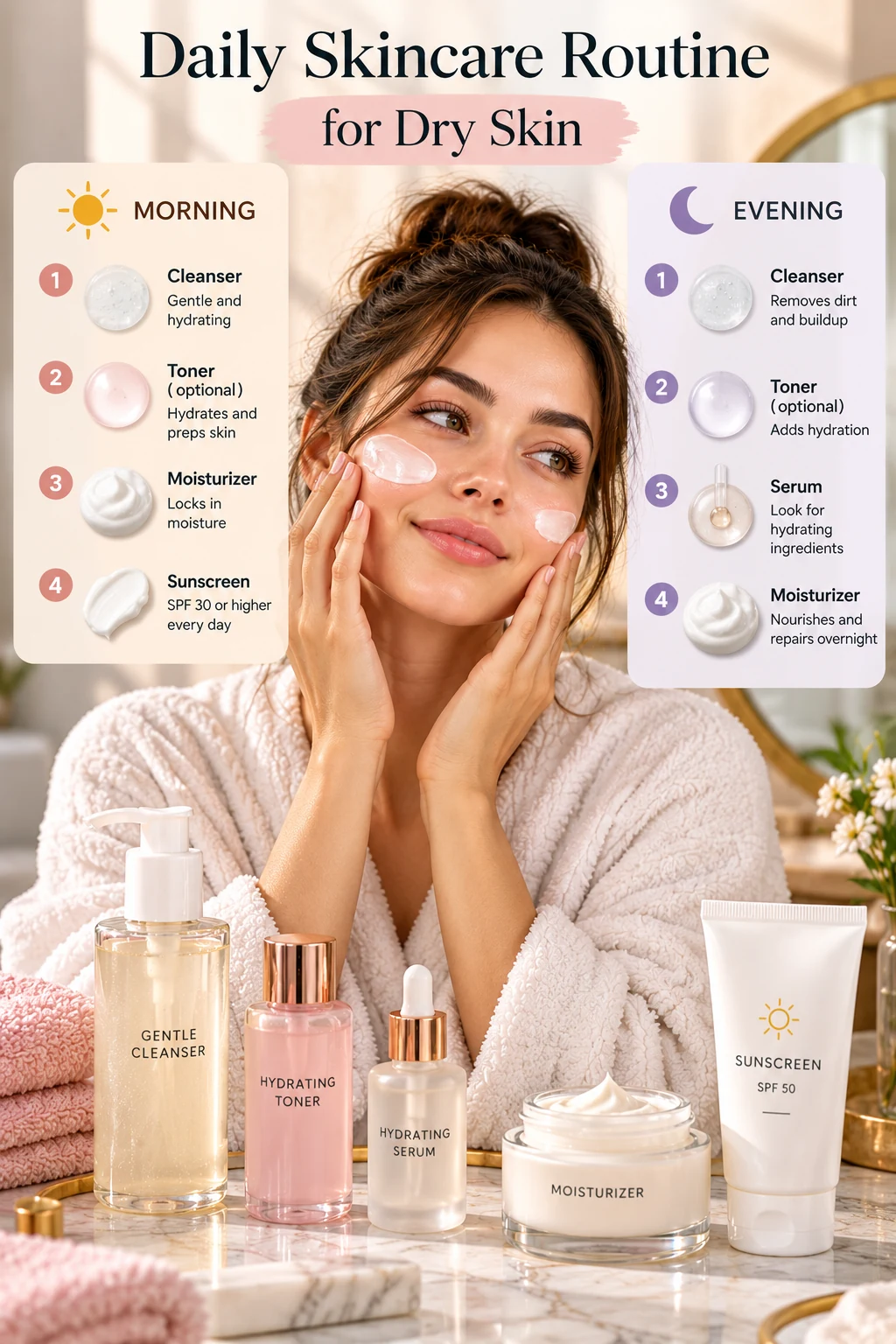
A Simple Daily Skincare Routine for Dry Skin
Consistency matters more than having a long list of products. A basic routine can help you care for dry skin without overwhelming it. Adjust the steps to your needs, and follow any specific instructions from your healthcare professional if you use prescribed skincare treatments.
Morning Routine
- Gently cleanse with lukewarm water or use a mild cleanser when needed.
- Apply any suitable hydrating product if it feels comfortable on your skin.
- Apply a moisturizer that suits your level of dryness.
- Finish with broad-spectrum SPF 30 or higher on exposed skin.
Evening Routine
- Remove makeup and sunscreen with a gentle cleanser.
- Avoid harsh scrubs and unnecessary exfoliation while skin feels dry or irritated.
- Apply moisturizer while the skin is slightly damp.
- Use a richer cream or ointment on particularly dry areas if needed and tolerated.
If you are still learning the order of your products, visit our skincare routine order guide. Beginners can also follow our skincare routine for beginners for a simpler starting point.
Skincare Mistakes That Can Make Dryness Worse
When skin feels rough or flaky, it can be tempting to scrub away the flakes or add several new products. However, aggressive treatments can increase irritation and make it harder to understand what your skin actually needs. A gentle, consistent routine is usually a better starting point.
Using Very Hot Water
Hot water and long showers can worsen dryness. Keep showers short, use warm water, and moisturize shortly after bathing.
Exfoliating Flaky Skin Too Aggressively
Flaking does not automatically mean your skin needs exfoliation. Scrubs and strong exfoliating ingredients can further irritate dry or sensitive skin. Focus on moisturizing first, and avoid exfoliating areas that are cracked, sore, or inflamed.
Changing Too Many Products at Once
Adding several new products together makes it difficult to identify which one helps or causes irritation. Introduce products gradually and keep track of how your skin responds. Stop using products that cause persistent stinging, swelling, or a rash.
Ignoring Sunscreen
Sun protection remains important even when your main concern is dryness. Choose a sunscreen you can comfortably wear and apply it according to its label. If sunscreen pills under makeup, our guide explains some possible causes: why sunscreen pills and how to troubleshoot it.
When Should You See a Dermatologist?
Many cases of ordinary dryness improve with gentle care and regular moisturizing. However, you should seek medical advice if your skin remains very dry despite consistent care, or if the problem keeps returning without an obvious cause.
Arrange a professional assessment if your skin becomes painful, severely itchy, inflamed, cracked, bleeding, or develops open sores. A widespread rash or signs of infection also need medical attention. These symptoms may require a diagnosis or treatment beyond a standard moisturizer.
A healthcare professional can help identify whether another condition or a product reaction is contributing to your symptoms. Avoid using prescription-strength creams or medicated treatments without appropriate guidance.
For further information, see the Mayo Clinic’s guidance on dry skin treatment.
Frequently Asked Questions
What is the best treatment for dry skin?
A gentle cleanser, regular use of a suitable moisturizer, shorter warm showers, and avoiding irritating products are useful starting points. The best approach depends on the cause and severity of your dryness.
Is cream better than lotion for dry skin?
Creams are generally richer than lotions, and ointments are often richer still. A cream or ointment may be more helpful for very dry skin, while a lighter lotion may suit mild dryness or personal texture preferences.
How often should I apply moisturizer?
Apply moisturizer after washing or bathing and again whenever your skin feels dry. Some people need to moisturize several times a day, depending on their skin and environment.
Should I exfoliate dry, flaky skin?
Do not scrub skin that is irritated, cracked, or sore. Exfoliation can worsen dryness for some people. Focus on gentle cleansing and moisturizing first, and seek professional advice if flaking persists.
Can dry skin be a sign of a skin condition?
Yes. Persistent dryness, itching, redness, or recurring patches can sometimes be associated with conditions such as eczema or dermatitis. A healthcare professional can help identify the cause.
When should I get medical advice for dry skin?
Seek medical advice if dryness does not improve with gentle care, becomes painful, cracks or bleeds, causes severe itching, or develops signs of infection.